Boost AI Visibility with Structured Data
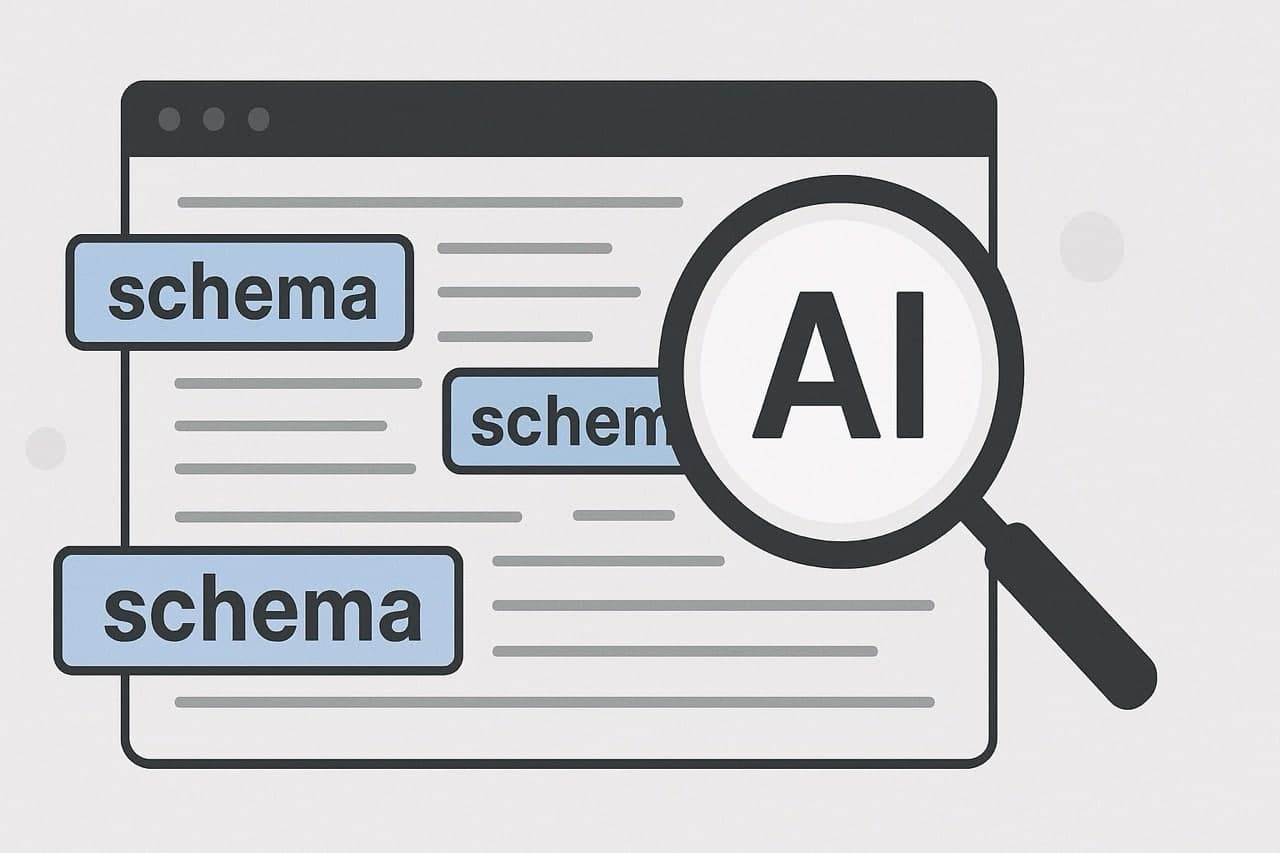
When AI-driven tools like ChatGPT, Google AI Overviews, and Perplexity deliver answers, they no longer rely solely on links. Instead, they parse, understand, and synthesise content directly from websites. For small and medium-sized Australian businesses, this means structured data has become critical for getting cited in AI-generated responses.
What is Structured Data?
Structured data refers to code—usually in JSON-LD format—embedded in your website that tells search engines and AI systems exactly what your content means. It doesn’t change what visitors see, but it greatly enhances how machines interpret your content.
For example, instead of just displaying the name “Jane Doe,” structured data specifies that Jane Doe is the author of an article or the owner of a business. This clarity improves your visibility in both traditional search and AI tools.
Why AI Systems Rely on Structured Data
Modern AI tools don’t just crawl links—they interpret context. Structured data helps by:
- Defining your business name, location, contact info, and services
- Clarifying roles (e.g., owner, author, product)
- Providing context around blog articles, FAQs, reviews, and products
- Helping AI systems decide which brand to mention in summarised results
When your content includes structured data, it’s more likely to be surfaced and cited in tools like ChatGPT, Google’s AI Overviews, or even Bing’s Copilot.
Types of Structured Data to Prioritise
1. Organisation Schema
Identify your business name, logo, website, contact points, and social profiles.
2. Local Business Schema
Particularly useful for businesses targeting local customers in Sydney or regional areas. It includes your physical address, phone number, and opening hours.
3. Article and Blog Schema
Enhances the way your blog posts appear in search and AI tools by clearly defining titles, authors, publication dates, and featured images.
4. Product and Service Schema
Essential for trade, retail, and e-commerce sites. It outlines what you sell, pricing, and key product attributes.
5. FAQ Schema
Used to mark up common questions and answers. These are often pulled directly into AI-generated responses and Google’s featured snippets.
How to Implement Structured Data
Option 1: Manual Implementation
You can manually add JSON-LD schema to your site’s head or body tags. Here’s an example of an Organisation schema:
{
  "@context": "https://schema.org",
  "@type": "Organization",
  "name": "BSharp Tech",
  "url": "/",
  "logo": "/logo.png",
  "contactPoint": {
    "@type": "ContactPoint",
    "telephone": "+61-2-1234-5678",
    "contactType": "Customer Service",
    "areaServed": "AU",
    "availableLanguage": "English"
  },
  "sameAs": [
    "https://www.facebook.com/bsharptech",
    "https://www.linkedin.com/company/bsharptech"
  ]
}
You can manually add JSON-LD schema to your site’s head or body tags. However, this requires a good understanding of coding and schema.org specifications.
Option 2: Use Rank Math Pro for WordPress
For WordPress sites, Rank Math Pro is a powerful SEO plugin that simplifies structured data:
- Automatically assigns schema to pages and posts
- Offers 20+ schema types out of the box
- Includes a custom schema builder for advanced needs
- Validates your schema before publishing
- Integrates well with WooCommerce and local SEO plugins
With Rank Math Pro, even non-technical business owners can ensure their content is AI-friendly.
Option 3: Using Shopify
If you’re using Shopify, structured data is often built into your theme, but you can further enhance it:
- Use SEO apps like JSON-LD for SEO by Ilana Davis to add and manage structured data.
- Themes like Dawn and Turbo include basic schema but may require customisation for advanced use cases.
- Shopify’s Liquid templates allow developers to embed custom schema directly if needed.
- Focus on product schema, organisation info, and review markup to maximise visibility in AI tools and Google Shopping.
Shopify users should routinely test their structured data using Google’s Rich Results Test and adjust templates or install apps as needed.
Structured Data and Generative Engine Optimisation (GEO)
GEO is the evolution of SEO—it’s about optimising your site not just for Google, but for AI interfaces. Structured data is at the heart of this. When AI needs a trustworthy answer, it will look for brands that:
- Consistently appear with clear, structured context
- Are cited by other trusted sources
- Use a schema to clarify their role and relevance
Real-World Impact
Businesses using structured data correctly are more likely to:
- Get cited by name in AI tools like ChatGPT, Google AI Overviews, Microsoft Copilot, and Perplexity. These platforms rely heavily on structured data to determine which brands to mention in their summarised responses. When your structured data is consistent and accurate, it signals trust and relevance—factors that generative AI models prioritise when selecting sources to cite. Most AI engines scan and process structured content alongside natural language to formulate answers, so implementing schema increases the chance your brand will be recognised and referenced across multiple AI-driven environments.
- Appear in enhanced Google results with rich snippets, which are visually enriched search listings that include additional information like star ratings, FAQs, product prices, and availability. Rich snippets help your content stand out in search results and can significantly increase click-through rates. For example, a product page with structured data might display the product name, price, rating, and number of reviews directly in the search listing.
Structured data enables this by giving Google the context it needs to display these enhanced details.
- Reduce ambiguity and increase brand trustworthiness. Structured data allows AI systems and search engines to accurately understand the roles, relationships, and offerings related to your business. By removing uncertainty—such as whether a name refers to a person, a product, or a business—structured data improves the precision of information retrieval. When your business details are clearly defined, AI tools are more likely to treat your content as credible and reliable. This leads to stronger brand recognition, enhanced reputation, and increased chances of being cited as a trusted source across various AI platforms and search environments.
Final Thoughts
If you’re running an established small or medium business and want to stand out in the AI age, structured data isn’t optional—it’s essential. Tools like Rank Math Pro make it accessible, even for those without a technical background. Shopify users also have practical tools and themes that support strong schema implementations.
By implementing structured data for AI visibility, you’re ensuring your business isn’t just searchable—but discoverable, referenceable, and authoritative in an AI-driven digital landscape.
Further Reading Resources: