Understanding White Hat, Grey Hat, and Black Hat Backlinking: A Comprehensive Guide
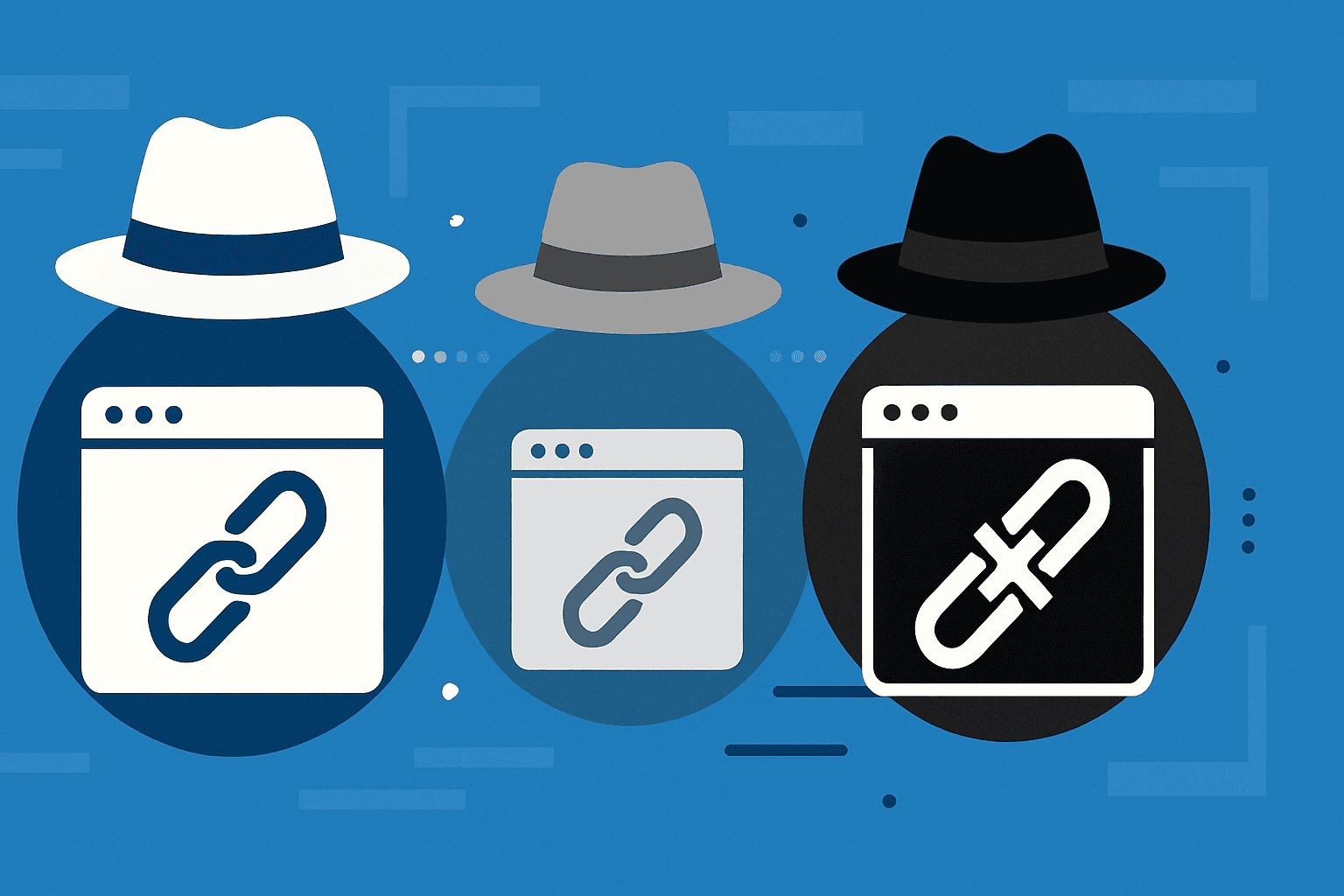
Backlinking remains a cornerstone of search engine optimisation (SEO), influencing how websites rank on search engines like Google. However, not all backlinks are created equal, and the methods used to acquire them can significantly impact a website’s credibility, visibility, and long-term success. Backlinking strategies are broadly categorised into three types: white hat, grey hat, and black hat. Each approach has distinct characteristics, ethical implications, and risks. In this blog, we’ll dive into the nuances of white hat, grey hat, and black hat backlinking, exploring their definitions, techniques, benefits, and potential pitfalls to help you make informed decisions for your SEO strategy.
What Are Backlinks and Why Do They Matter?
Before delving into the types of backlinking, let’s clarify what backlinks are. A backlink is a hyperlink from one website to another, acting as a “vote of confidence” in the eyes of search engines. The more high-quality, relevant backlinks a website has, the more authoritative it appears, which can boost its rankings in search engine results pages (SERPs). However, the quality, relevance, and method of acquiring these links are critical, as search engines like Google use sophisticated algorithms to evaluate them.
The ethics and techniques behind backlink acquisition determine whether a strategy falls under white-hat, grey-hat, or black-hat SEO. Let’s break down each category.
White Hat Backlinking: The Ethical Approach
White hat backlinking adheres to search engine guidelines, focusing on organic, ethical, and sustainable methods to build links. This approach prioritises user experience, content quality, and genuine relationships over manipulative tactics.
Key Characteristics of White Hat Backlinking
- High-Quality Content Creation: White hat SEO relies on creating valuable, informative, and engaging content that naturally attracts links from other websites. Examples include in-depth blog posts, research studies, infographics, or tools that others find worth referencing.
- Outreach and Relationship Building: White hat practitioners reach out to relevant websites, bloggers, or influencers to promote their content. This might involve guest blogging, where a website owner writes a high-quality article for another site in exchange for a backlink.
- Natural Link Acquisition: Links are earned organically when other websites find your content valuable and link to it without solicitation.
- Relevance and Authority: White hat backlinks come from reputable, relevant websites within the same niche, ensuring the links make sense contextually.
Benefits of White Hat Backlinking
- Sustainability: White hat strategies align with search engine guidelines, reducing the risk of penalties or ranking drops during algorithm updates.
- Long-Term Results: Organic backlinks from authoritative sites contribute to sustained SEO success and brand credibility.
- Enhanced User Trust: High-quality content and ethical practices build trust with both users and search engines.
Challenges
White hat backlinking requires significant time, effort, and resources to produce exceptional content and build relationships. Results may take longer to materialize compared to less ethical methods.
Example Techniques
- Writing guest posts for industry-leading blogs.
- Creating shareable infographics or original research that others naturally link to.
- Collaborating with influencers or thought leaders to promote content.
Grey Hat Backlinking: The Middle Ground
Grey hat backlinking occupies a murky middle ground between ethical and unethical practices. These techniques don’t explicitly violate search engine guidelines but often skirt the edges, exploiting loopholes or bending rules to achieve faster results.
Key Characteristics of Grey Hat Backlinking
- Moderately Manipulative Tactics: Grey hat methods may involve paying for links in a way that appears natural, such as sponsored posts or niche edits (inserting links into existing content on other sites).
- Private Blog Networks (PBNs): Some grey hat practitioners use PBNs, which are networks of websites created to link to a target site. While not always detectable, this practice carries risks.
- Commenting and Forum Links: Leaving links in blog comments, forums, or directories with some relevance, though often with less focus on quality.
- Crowdsourced Content: Using platforms like Quora or Reddit to subtly promote content with links, sometimes in a way that feels less organic.
Benefits of Grey Hat Backlinking
- Faster Results: Grey hat methods often yield quicker ranking improvements compared to white hat strategies.
- Cost-Effective: Some grey hat tactics, like niche edits, can be less resource-intensive than producing high-quality content.
- Moderate Risk: While riskier than white hat, grey hat techniques are less likely to trigger immediate penalties compared to black hat methods.
Challenges
- Ambiguity: Grey hat practices can become black hat if search engines update their guidelines, leading to potential penalties.
- Short-Term Focus: These tactics may provide quick wins but lack the sustainability of white hat strategies.
- Reputation Risk: If discovered, grey hat tactics could harm a brand’s credibility.
Example Techniques
- Paying for a link in a “sponsored” guest post without clear disclosure.
- Using PBNs to create the appearance of organic links.
- Adding links to low-quality directories or forums with marginal relevance.
Black Hat Backlinking: The Risky Shortcut
Black hat backlinking involves tactics that explicitly violate search engine guidelines, prioritizing quick results over ethics or sustainability. These methods are designed to manipulate search engine algorithms, often at the expense of user experience.
Key Characteristics of Black Hat Backlinking
- Spammy Link Building: Purchasing thousands of low-quality links from irrelevant or low-authority sites, such as link farms or automated directories.
- Hidden Links: Embedding links in ways that are invisible to users, such as white text on a white background.
- Hacked Links: Injecting links into compromised websites without the owner’s knowledge.
- Automated Tools: Using software to generate thousands of backlinks through comment spam, forum spam, or fake profiles.
Benefits of Black Hat Backlinking
- Rapid Results: Black hat tactics can lead to quick ranking boosts, especially for short-term campaigns.
- Low Initial Effort: Automated tools and cheap link purchases require minimal effort compared to content creation.
Challenges
- High Risk of Penalties: Search engines like Google actively penalize black hat tactics, which can result in ranking drops, de-indexing, or complete removal from SERPs.
- Short-Lived Gains: Algorithm updates, such as Google’s Penguin, are designed to detect and nullify black hat links, rendering these efforts futile.
- Damage to Reputation: Associating with spammy or unethical practices can harm a brand’s credibility and trustworthiness.
Example Techniques
- Buying links from link farms or low-quality directories.
- Using automated bots to spam blog comments with links.
- Hacking websites to insert backlinks without permission.
Comparing the Three Approaches
| Aspect | White Hat | Grey Hat | Black Hat |
|---|---|---|---|
| Ethics | Fully ethical, guideline-compliant | Ethically ambiguous | Unethical, violates guidelines |
| Risk Level | Low | Moderate | High |
| Sustainability | High | Moderate | Low |
| Effort Required | High | Moderate | Low |
| Results Timeline | Long-term | Short to medium-term | Short-term |
Which Approach Should You Choose?
The choice between white hat, grey hat, and black hat backlinking depends on your goals, risk tolerance, and commitment to ethical practices. For most businesses, white hat backlinking is the safest and most sustainable option. It aligns with search engine guidelines, builds long-term authority, and enhances user trust. While it requires more time and effort, the results are more resilient to algorithm changes and contribute to a reputable online presence.
Grey hat backlinking may appeal to those seeking faster results without diving fully into unethical territory. However, the ambiguity of these tactics means they carry risks, especially as search engines become more adept at detecting manipulative practices. Businesses using grey hat methods should proceed with caution and monitor algorithm updates closely.
Black hat backlinking is generally not recommended, as the risks far outweigh the benefits. While it may offer short-term gains, the likelihood of penalties, ranking drops, or even de-indexing makes it a dangerous strategy for any serious business.
Best Practices for Ethical Backlinking
To maximise the benefits of backlinking while minimising risks, consider these best practices:
- Focus on Quality Over Quantity: Prioritise backlinks from authoritative, relevant websites rather than chasing sheer volume.
- Create Exceptional Content: Invest in content that naturally attracts links, such as original research, guides, or interactive tools.
- Build Relationships: Engage with industry influencers, bloggers, and website owners to foster organic link opportunities.
- Monitor Your Backlink Profile: Use tools like Ahrefs or Moz to track your backlinks and disavow any spammy or low-quality links.
- Stay Updated: Keep abreast of search engine guideline updates to ensure your strategies remain compliant.
Conclusion
Backlinking is a powerful SEO tool, but the approach you take—white hat, grey hat, or black hat—can make or break your website’s success. White hat backlinking offers the most sustainable and ethical path, building a strong foundation for long-term growth. Grey hat tactics may provide quicker results but come with risks that require careful consideration. Black hat methods, while tempting for their speed, are a gamble that often leads to severe consequences. By understanding the differences between these approaches and prioritising ethical practices, you can craft a backlinking strategy that boosts your rankings while safeguarding your website’s reputation.