What Does “Above the Fold” Mean?

“Above the fold” refers to the portion of a webpage or digital content that is immediately visible to a user without scrolling when they land on a page. The term originated from print newspapers, where the most important headlines, images, and stories were placed on the upper half of the front page—above where the paper was folded—to grab attention on news stands.
In the digital context, “above the fold” applies to websites, emails, and other forms of digital media. It represents the content users see instantly after loading a page, heavily influenced by their device’s screen size and resolution. For instance, the “above the fold” content on a desktop browser will differ from that on a mobile device. Modern responsive design must consider these variations, adapting content placement for different screen sizes to maintain the intended impact.
Conversely, content that falls outside and beneath the “above the fold” area is referred to as “below the fold.” This distinction is critical in determining where to place essential information to maximise engagement and conversions.
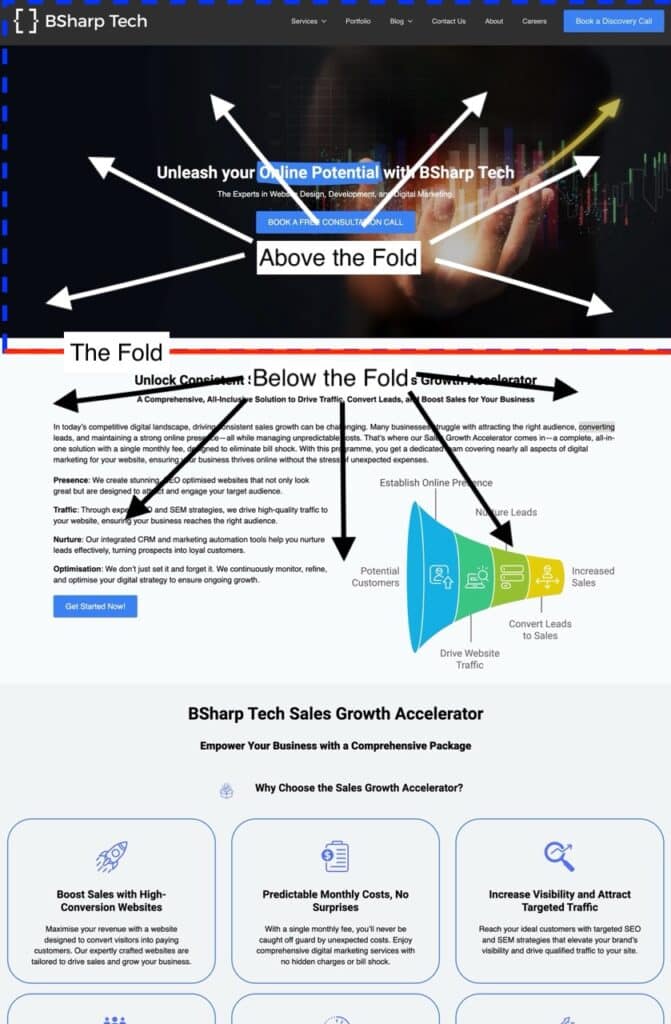
Here is a screenshot of a website homepage that demonstrates the concept visually. Everything above the red line—the fold—is considered “above the fold” content, while anything below it is classified as “below the fold.”
Why Is “Above the Fold” Important?
The concept of “above the fold” plays a significant role in web design, marketing, and user experience (UX). Its importance can be boiled down to three primary reasons: first impressions, engagement and conversion, and its impact on SEO and user experience.
1. First Impressions Matter
Users form an impression of a webpage in mere seconds. The content they encounter above the fold determines whether they will stay, scroll further, or leave the site altogether. Research shows that users typically spend about 57% of their viewing time on content above the fold, with significantly less attention given to below-the-fold content.
This underscores the importance of having a well-designed and compelling above-the-fold section. If the first thing a user encounters is confusing, irrelevant, or unappealing, they are likely to exit the page, potentially increasing your bounce rate.
2. Engagement and Conversion
Key elements such as headlines, call-to-action (CTA) buttons, and visuals placed above the fold naturally attract more attention due to their visibility. For example:
• A headline that succinctly conveys the value of a product or service can hook the user immediately.
• A CTA button, such as “Book a Consultation” or “Get Started,” prominently displayed above the fold, can encourage users to take action without the need to scroll further.
• Eye-catching visuals can immediately draw the user’s attention, helping to convey the message effectively and encouraging further page exploration.
These elements collectively influence user behaviour. Strategically placed content above the fold increases the likelihood of engagement, making it a crucial factor for driving conversions.
3. SEO and User Experience
Search engines like Google place significant weight on user engagement metrics like bounce rates, time spent on a page, and click-through rates. When visitors find clear, valuable content above the fold, they are more likely to stay and explore the page, sending positive signals to search engines about its relevance and quality.
Additionally, user-friendly, above-the-fold content improves the overall experience, helping visitors quickly understand the purpose of the page without having to scroll or search for key information. This is especially important for landing pages, where immediate clarity can directly impact conversion rates.
Best Practices for Optimising Above-the-Fold Content
To make the most of the above-the-fold area, certain design principles should be followed. These best practices ensure that the content displayed is both engaging and effective in achieving its goals.
1. Prioritise Key Information
The most critical message, whether it’s a headline, a promotional offer, or a CTA, should be placed prominently above the fold. For example, an e-commerce website might use this space to showcase a limited-time discount or a bestselling product, immediately capturing the user’s interest.
2. Use Compelling Visuals
Images, videos, or graphics that align with your message can significantly enhance engagement. For instance, a high-quality product image or a short introductory video can be more effective than plain text in grabbing attention and conveying value.
3. Optimise for Different Devices
With users accessing content on a variety of devices, from smartphones to desktops, responsive design is essential. Content that looks well-structured and impactful on a desktop might appear cluttered or difficult to read on a smaller mobile screen. Test your website on multiple devices to ensure a seamless user experience across all platforms.
4. Ensure Fast Load Times
Even the most engaging above-the-fold content will fail if it loads too slowly. Studies show that users are likely to leave a page if it takes longer than three seconds to load. Use tools to optimise your website’s performance and ensure that above-the-fold elements appear quickly, even on slower connections.
5. Keep It Simple and Clear
Avoid overwhelming users with too much information above the fold. Focus on delivering a clear and concise message that directs them toward the next step, whether it’s scrolling, clicking a CTA, or reading further.
Challenges and Considerations
While “above the fold” remains a crucial concept in web design, it’s important to remember that it’s not the only area of importance. Placing all your content above the fold can lead to clutter and overwhelm users. A balance must be struck between providing immediate value and encouraging users to explore the rest of the page.
Moreover, scrolling behaviour has evolved. Today’s users are generally more willing to scroll, particularly if they see a clear visual cue that indicates more content is available. For this reason, the design of “below the fold” content is also critical—it should complement and build upon what users see above the fold.
Conclusion
The concept of “above the fold” has transitioned seamlessly from print media to the digital world, retaining its importance in grabbing attention and driving engagement. You can create a strong first impression, encourage interaction, and improve conversion rates by prioritising engaging, clear, and valuable content in this space.
However, it’s equally important to maintain a holistic approach to design and content placement, ensuring that the entire user experience—both above and below the fold—is seamless and compelling. Whether designing a website, crafting an email campaign, or creating a landing page, understanding and leveraging the power of “above the fold” can make a significant difference in achieving your digital marketing and UX goals.