Key Traffic Generation Strategies in 2025

Having a website is a crucial foundation for any business. However, simply building a website is not enough to drive success. A beautiful, well-functioning site without visitors is like having a shop in the middle of the desert—no one knows it exists. To truly unleash your online potential, you need a traffic generation strategy to drive visitors to your website and turn them into loyal customers. Below, we delve into some key traffic generation strategies.
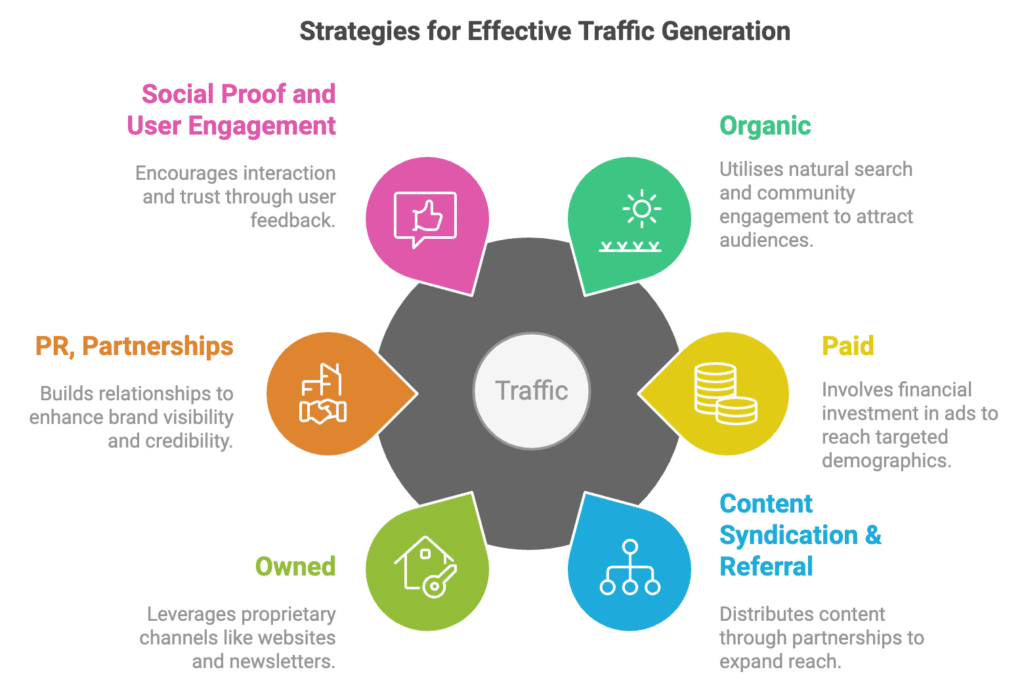
We will examine each of these areas in the sections below.
Organic Traffic Generation Strategies
Organic traffic refers to visitors who find your website through unpaid methods, particularly search engines. This strategy relies on long-term efforts but delivers sustainable results. Let’s explore the five key components of organic traffic generation:
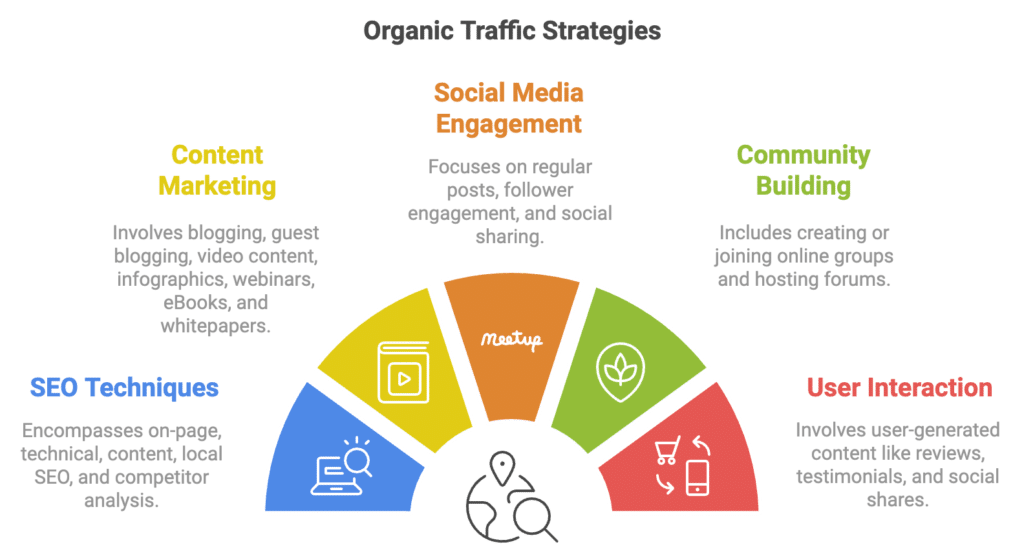
1. SEO Techniques
Search Engine Optimisation (SEO) is the cornerstone of organic traffic. It involves tailoring your website to rank higher in search engine results pages (SERPs), making it easier for users to find you.
- On-Page SEO: Optimise your meta titles, descriptions, headings, and content for relevant keywords.
- Technical SEO: Ensure your website has a fast loading time, mobile-friendly design, and proper indexing.
- Content SEO: Create high-quality, keyword-rich content that addresses user intent.
- Local SEO: Optimise for location-based searches by listing your business on Google My Business and other directories.
- Competitor Analysis: Regularly analyse competitors to identify keyword opportunities and improve your strategy.
2. Content Marketing
Content marketing is at the heart of organic traffic generation. It involves creating and sharing valuable, relevant content to attract and engage your target audience.
- Blogging: Regularly publish blogs that address your audience’s pain points, answer their questions, and provide solutions.
- Guest Blogging: Collaborate with industry-related blogs to reach a wider audience.
- Video Content: Create engaging videos that explain your products or services.
- Webinars and eBooks: Provide in-depth resources that showcase your expertise and build trust.
- Infographics and Whitepapers: Use visually appealing content to simplify complex topics and share data-driven insights.
3. Social Media Engagement
Social media platforms are powerful tools for driving organic traffic and building relationships with your audience.
- Regular Posts: Maintain a consistent posting schedule to keep your audience engaged.
- Follower Engagement: Respond to comments, messages, and mentions to build trust and loyalty.
- Social Sharing: Encourage followers to share your content to expand your reach.
- Promotions and Giveaways: Use creative campaigns to generate excitement and drive traffic to your website.
4. Community Building
Building a community fosters a sense of belonging and encourages ongoing engagement with your brand.
- Online Groups: Create or join groups on platforms like Facebook or LinkedIn to connect with your target audience.
- Hosting Forums: Provide a space on your website for users to discuss topics related to your industry.
- Networking Events: Organise or participate in virtual or in-person meetups to grow your audience.
- Collaborative Content: Partner with community members to co-create content that resonates with your audience.
5. User Interaction
User interaction creates a dynamic and engaging experience that encourages visitors to return and recommend your site.
- User-Generated Content: Showcase reviews, testimonials, and customer-submitted photos.
- Interactive Features: Add polls, quizzes, and surveys to your website.
- Live Chats and Q&A Sections: Provide instant support and build trust through direct communication.
- Social Proof: Highlight user interactions and endorsements to increase credibility.
Social Proof and User Engagement Traffic Generation Strategies
Social proof is the currency of trust in the online world. It’s about showcasing the positive experiences of your customers to encourage new visitors to engage with your business. This strategy can be broken down into three key areas:
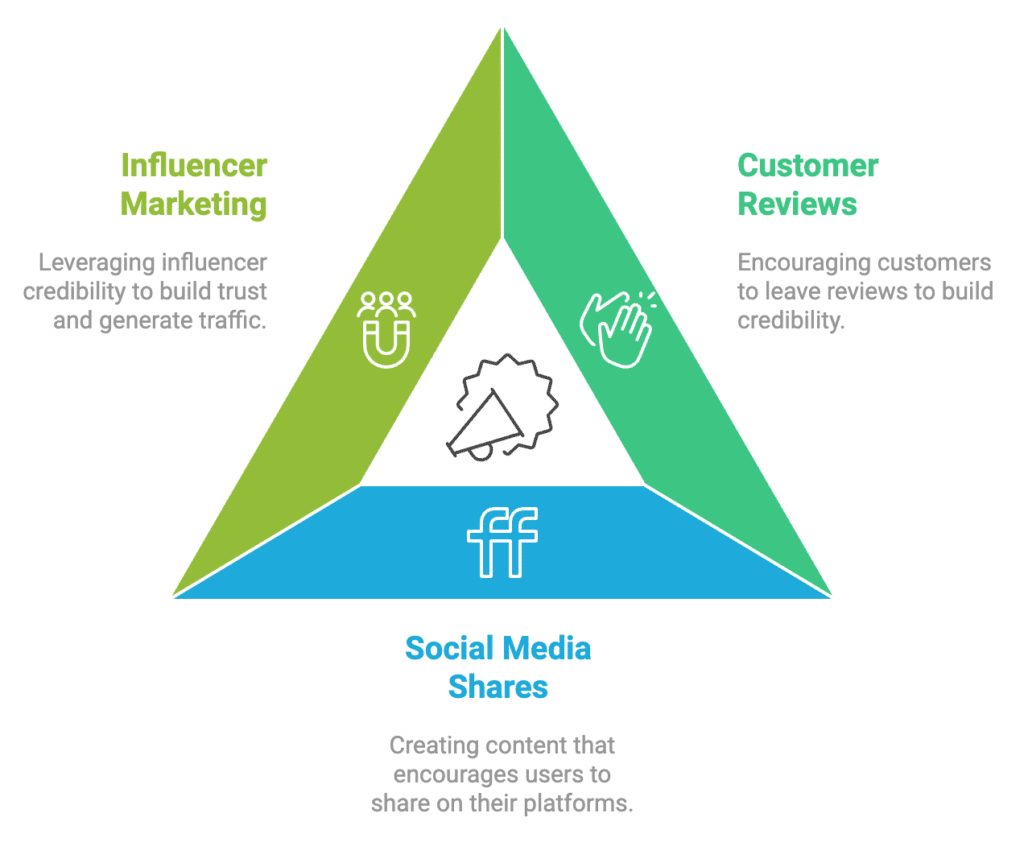
1. Influencer Marketing
Leverage influencer credibility to build trust and generate traffic. Influencers can promote your brand to their audience, helping you reach potential customers who trust their recommendations.
2. Customer Reviews
Encourage customers to leave reviews to build credibility. Display these reviews prominently on your website and social media to reassure potential clients about the quality of your services or products.
3. Social Media Shares
Create content that encourages users to share on their platforms. This includes engaging posts, shareable infographics, and relatable messages that prompt users to spread the word about your business.
Paid Traffic Generation Strategies
While organic and other strategies take time to yield results, paid traffic generation offers immediate visibility. Paid traffic strategies can be broken down into several key areas.
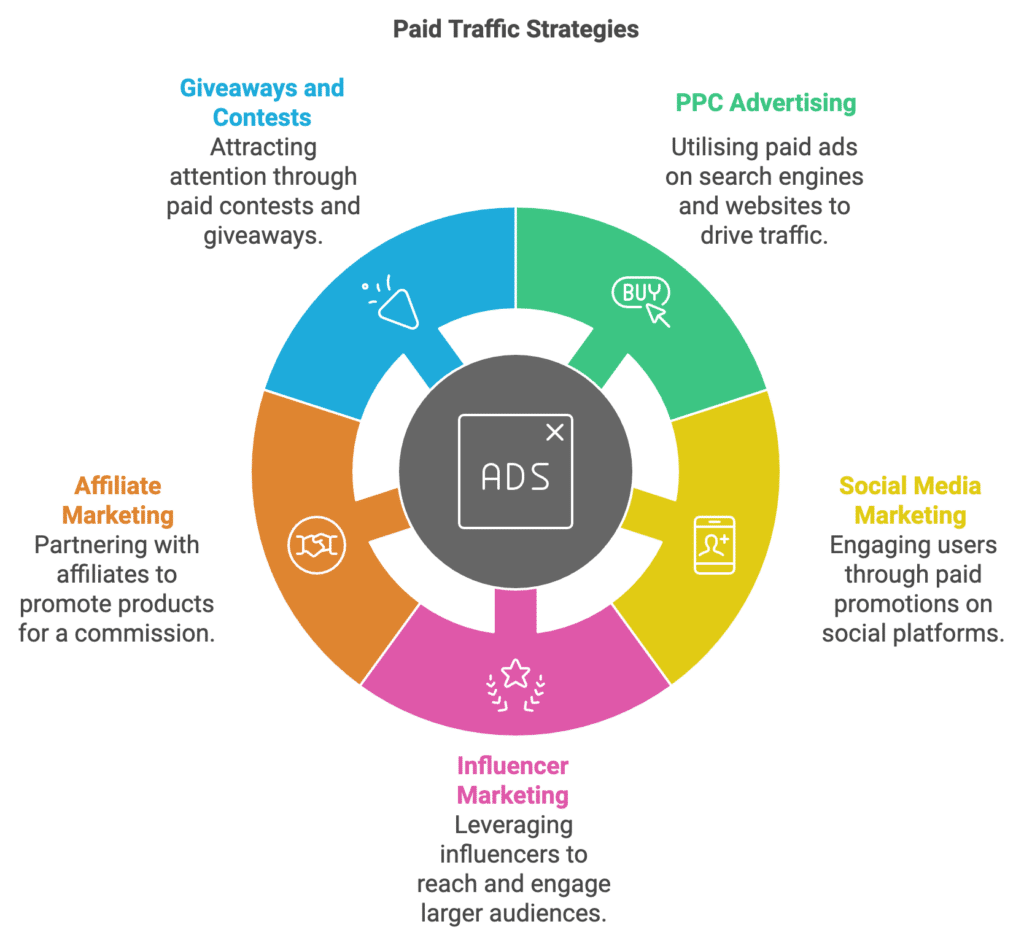
1. PPC Advertising
Pay-per-click (PPC) advertising involves using paid ads on search engines and websites to drive targeted traffic.
- Search Engine Ads: Use Google Ads or Bing Ads to target specific keywords and reach users actively searching for your products or services.
- Display Ads: Place banner ads on relevant websites to increase brand visibility.
- Shopping Ads: Showcase your products directly in search engine results for e-commerce businesses.
2. Social Media Marketing
Social media platforms offer advanced targeting options to help businesses reach specific audiences through paid promotions.
- Sponsored Posts: Promote content to increase visibility and engagement.
- Carousel Ads: Showcase multiple products or features in a single ad.
- Video Ads: Use engaging video content to capture attention and drive clicks.
3. Influencer Marketing
Collaborate with influencers to promote your brand to their followers. Influencers can help increase credibility and expand your reach, especially if their audience aligns with your target market.
4. Affiliate Marketing
Partner with affiliates to promote your products or services in exchange for a commission. This strategy helps you reach new audiences without upfront advertising costs.
5. Giveaways and Contests
Attract attention and generate buzz through paid contests and giveaways.
- Incentivised Engagement: Encourage users to participate by offering valuable prizes.
- Lead Generation: Collect email addresses or other information from participants to build your marketing list.
- Brand Awareness: Increase visibility as participants share your contest with others.
Content Syndication and Referral Traffic Generation Strategies
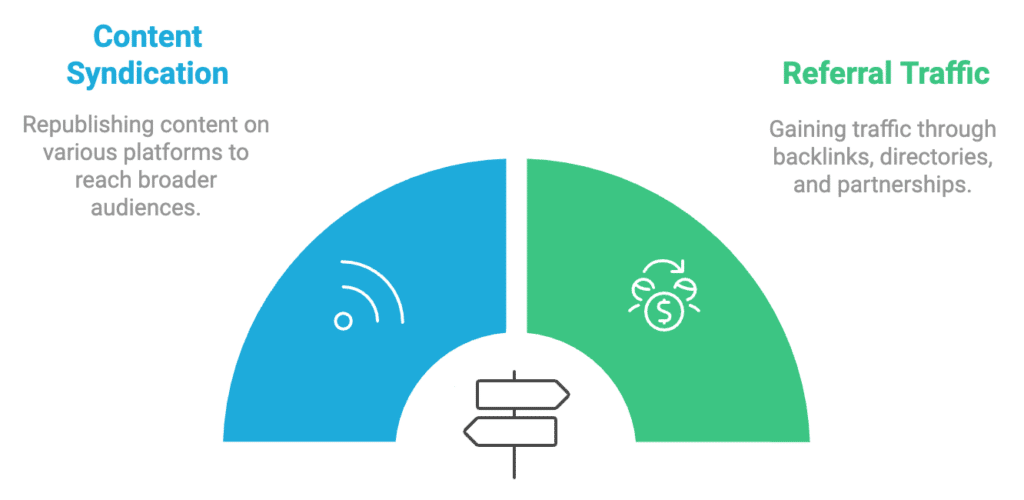
Content syndication and referral traffic are potent strategies for expanding your audience and driving targeted visitors to your site. These strategies focus on republishing content and leveraging partnerships to broaden your reach.
1. Content Syndication
Republish your content on external platforms to tap into larger audiences.
- Guest Posts: Write articles for authoritative blogs or websites in your industry.
- LinkedIn Articles: Share long-form content directly on LinkedIn to engage a professional audience.
- Content Aggregators: Use platforms like Medium or Flipboard to amplify your reach.
- Webinars and Presentations: Repurpose webinars and slide decks into shareable formats on platforms like SlideShare.
2. Referral Traffic
Referral traffic focuses on gaining visitors through backlinks, directories, and partnerships.
- Backlinks: collaborate with industry partners to earn backlinks from high-authority websites.
- Directories: List your business in reputable directories related to your niche.
- Partnerships: Build relationships with complementary businesses to co-promote services.
- Social Sharing: Encourage partners or affiliates to share your content with their networks.
Owned Channels Traffic Generation Strategies
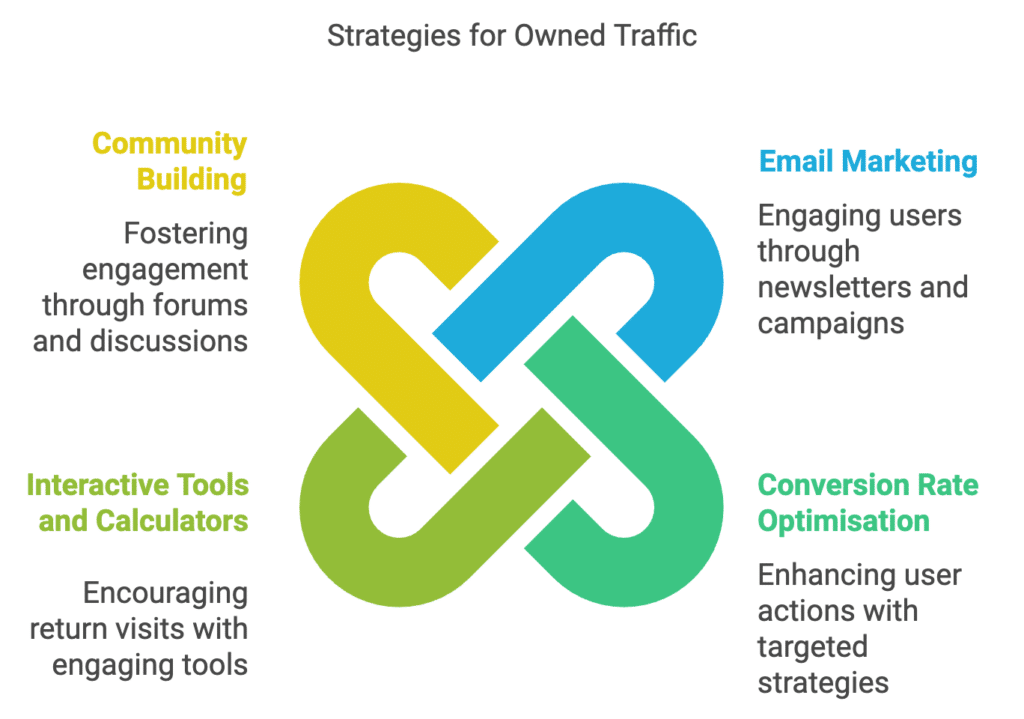
Owned traffic channels refer to platforms or tools that you fully control. These include your website, email lists, and newsletters. To expand on this, owned traffic strategies can also include the following:.
1. Email Marketing
Engage users through newsletters and campaigns:
- Targeted Campaigns: Send personalised emails to segmented lists to improve engagement.
- Automated Flows: Use email automation to welcome new subscribers, follow up on abandoned carts, or nurture leads.
2. Conversion Rate Optimisation (CRO)
Enhance user actions with targeted strategies:
- A/B Testing: Test different layouts, CTAs, and headlines to optimise conversions.
- User Analytics: Use tools like Google Analytics or Hotjar to identify areas for improvement.
3. Community Building
Foster engagement through forums and discussions:
- Interactive Forums: Add discussion boards where users can share ideas or ask questions.
- Exclusive Groups: Create invite-only groups for loyal customers or brand ambassadors.
4. Interactive Tools and Calculators
Encourage return visits with engaging tools:
- Cost Calculators: Provide tools that calculate pricing or savings for your customers.
- Interactive Quizzes: Add quizzes that offer personalised recommendations or insights.
PR and Partnerships
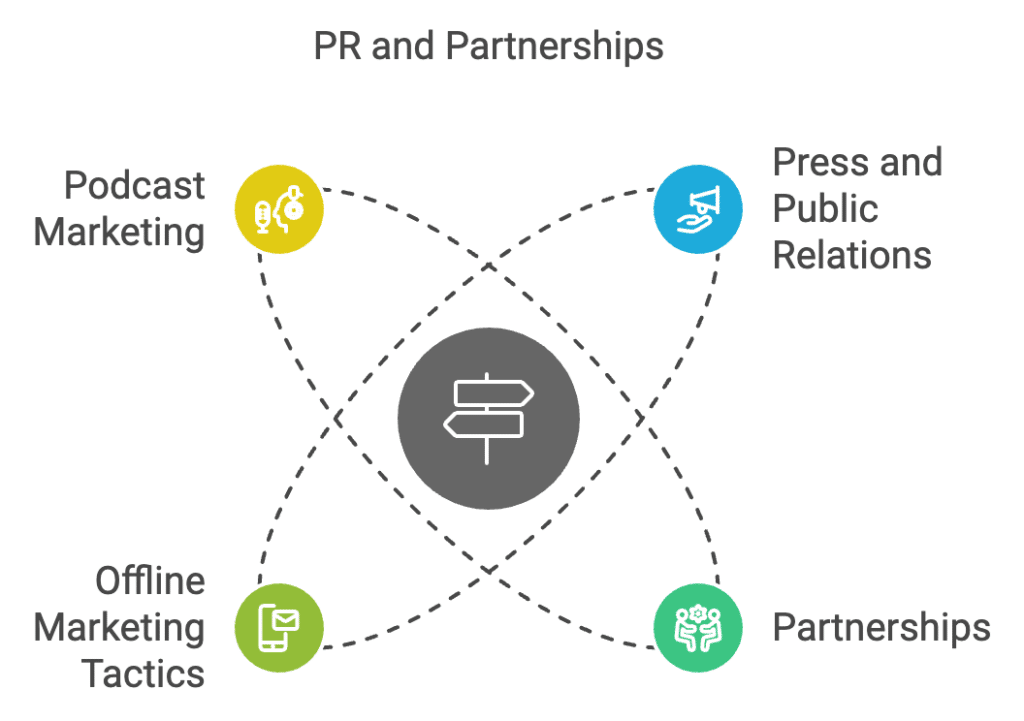
Public relations and partnerships focus on building relationships and increasing your brand’s credibility and visibility. These strategies can be expanded as follows:
1. Podcast Marketing
Leverage the growing popularity of podcasts to reach niche audiences:
- Guest Appearances: Speak on industry-related podcasts to showcase your expertise.
- Launch Your Own Podcast: Create a podcast to engage with your audience and discuss industry trends.
2. Press and Public Relations
Use PR campaigns to gain visibility:
- Press Releases: Announce product launches, milestones, or events to local and national media outlets.
- Media Features: Work with journalists or bloggers to feature your business in relevant publications.
3. Partnerships
Build partnerships to co-promote and expand your reach:
- Collaborative Campaigns: Partner with complementary brands to create joint marketing efforts.
- Affiliate Programs: Establish affiliate programs to incentivise others to promote your services.
4. Offline Marketing Tactics
Integrate traditional marketing methods to drive traffic:
- Event Sponsorships: Sponsor local or industry events to gain exposure.
- Printed Materials: Use flyers, brochures, or direct mail campaigns to reach potential customers.
Conclusion
Building a website is just the first step in establishing your digital presence. You need a well-rounded traffic generation strategy that incorporates these core strategies to achieve meaningful results. Combining organic and paid methods, social proof, content syndication, owned channels, and PR can attract the right audience, increase brand visibility, and ultimately grow your business.
Remember, the key to success lies in consistency and adaptability. Evaluate your efforts regularly, fine-tune your strategies, and stay ahead of your competitors. With the right approach, your website can become a powerful tool for business growth.